The new marketing frontier isn’t online. It’s on screen, in your drive-thru lanes and restaurants.
As the marketing mandate in restaurant brands shifts from static storytelling to measurable performance impact, every screen, whether it’s glowing above your counter or facing traffic in a drive-thru lane, is becoming a profit center.
In 2026, digital menu boards are no longer design elements or operational hardware. They are conversion channels that marketers must own. The question is no longer “are our boards on?” but “are they performing across every lane?”
For most marketing leaders, that’s where the tension lies:
- Speed to market is still stuck in traffic. You can ideate a brilliant LTO on Monday but wait two weeks for creative deployment while your drive-thru still loops last quarter’s promo.
- Attribution is murky. You can prove ROAS for paid media but not quantify how your screens impacted AOV, attachment rate, or day-part conversion.
- The tech stack is fragmented. Marketing, ops, and IT work in silos, so your in-store and drive-thru boards rarely launch in sync.
- Creative agility is missing. Campaigns that should pivot daily get trapped in approval cycles, vendor queues, or rigid CMS systems.
Meanwhile, your CFO is asking tougher questions:
“If digital menu boards are our most viewed media asset, why can’t we measure their ROI?”
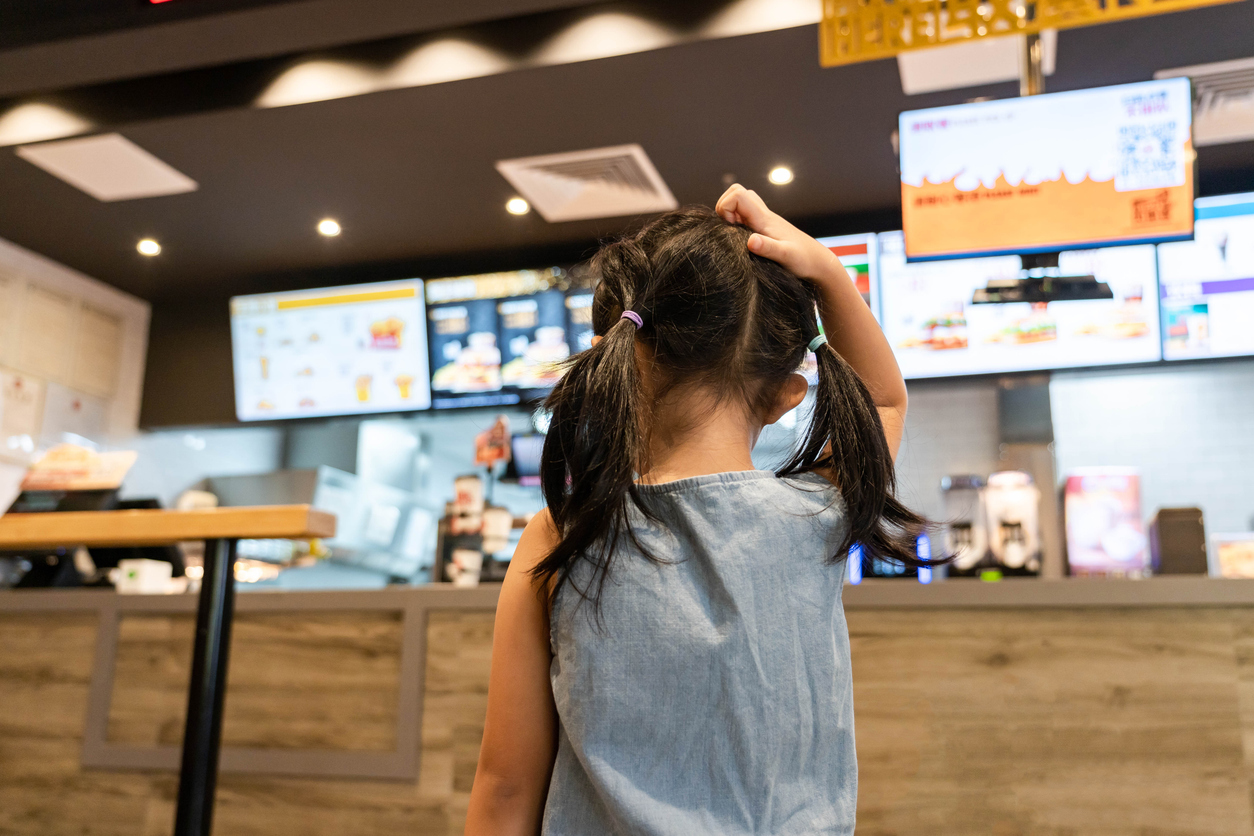
And guests aren’t waiting either. They’re forming purchase decisions in seconds, often through a car window, where the wrong creative, delay, or price mismatch can mean a lost sale.
That’s why 2026 will be the year marketing takes control of the lane - when CMOs reclaim digital menu boards as strategic, data-driven tools that test, optimize, and adapt in real time across every screen, inside and out.
1. Why the Marketing Lens Matters in 2026
For years, digital menu boards were managed by IT and operations. But as marketing becomes more accountable for revenue, that ownership model no longer works.
In 2026, every major marketing leader will need to treat their digital menu system as part of the marketing stack, as critical as CRM or ad tech. When 70% of QSR revenue flows through drive-thru (QSR Magazine, 2025), that’s not an operational touchpoint. It’s your last marketing impression.
Owning this channel means marketing teams can:
- Launch and retire campaigns in days, not weeks.
- Sync on-screen content with paid and loyalty offers.
- Test creatives at scale and attribute results to transactions.
- Build a real-time feedback loop between POS, pricing, and promotions.
In short, digital menu boards are no longer signage. They are programmatic marketing for the physical world.
2. The Shift: From Static Signage to Performance Screens
For decades, QSR marketing stopped at the store entrance. What happened on the menu board was a black box — a place to “show something nice,” not optimize for ROI.
But the data now tells a different story. These aren’t optional enhancements. They’re becoming core infrastructure requirements for enterprise-scale digital menu operations.
- Starbucks: Deploying custom-built CMS to power digital menu boards across all 11,000+ company-owned U.S. stores, enabling centralized control, faster updates, and brand-wide consistency.
- Shake Shack: Upgraded drive-thru experience with combo-friendly digital boards that improved speed, order accuracy, and guest satisfaction, especially at high-volume locations.
- McDonald’s: Rolling out AI-enhanced digital menu boards across 43,000+ global stores. Boards dynamically adjust based on weather, time, and demand, helping brands serve smarter, faster, and more consistently.
The only thing standing between you and powerful, agile digital menu operations is your choice in platform.
3. The Three Marketing Missions for 2026
a) Accelerate Creative Agility
Speed kills or saves campaigns. When your system allows same-day content pushes, every marketing moment can be captured — a regional sports win, a sudden weather shift, or a viral product trend.
In 2026, the best-performing brands will:
- Treat screens like live media, not static assets.
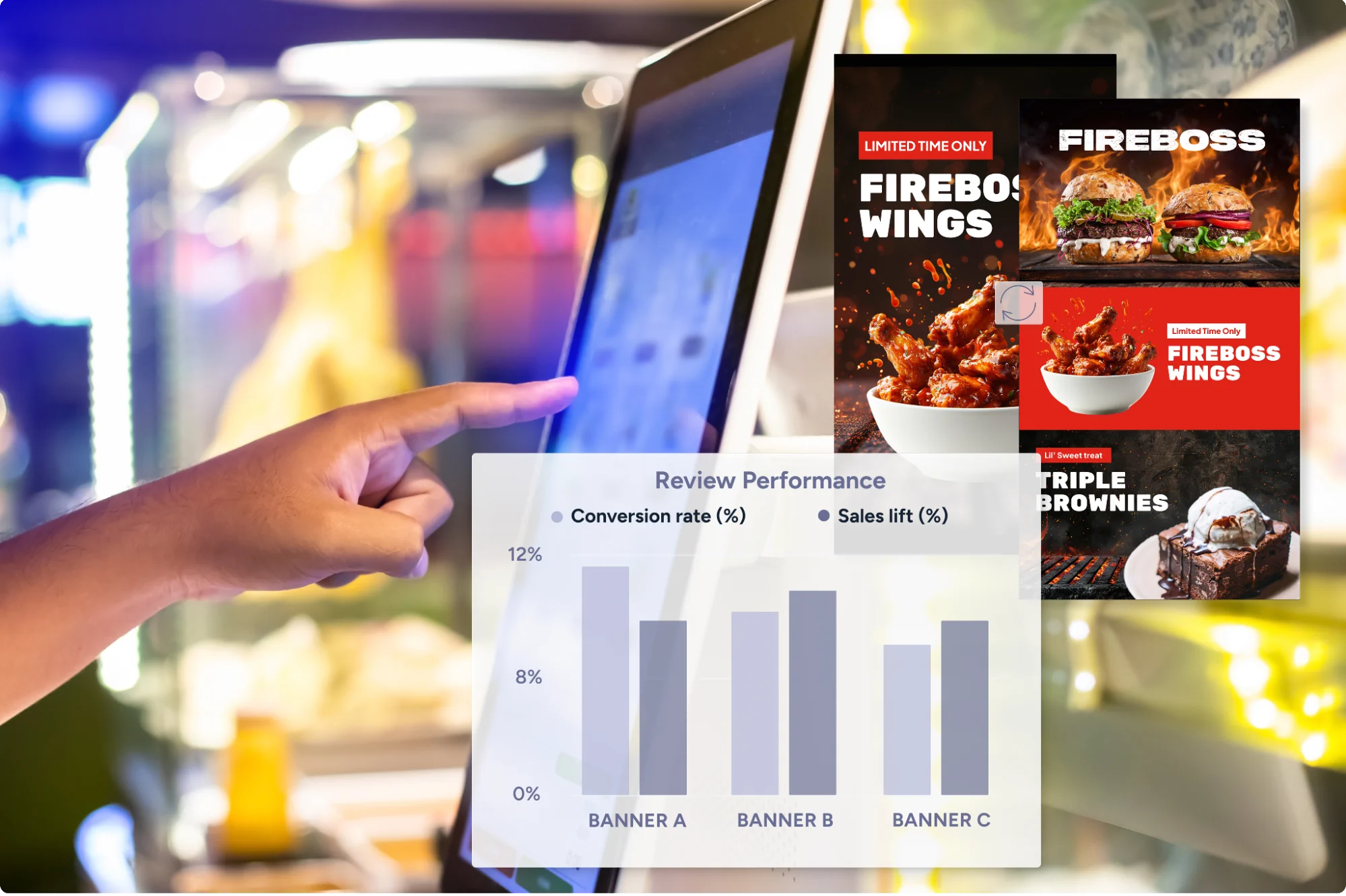
- Run simultaneous A/B tests on imagery, copy, and price framing.
- Automate creative swaps across hundreds of stores using real-time analytics.
Every second you spend waiting for the next upload is lost revenue.
b) Personalize Context at Scale
Guests don’t respond to generic offers. They respond to relevance.
AI-driven digital menu boards can now tailor promotions based on:
- Location and weather (cold drinks on hot days, warm bowls on cold nights)
- Daypart and demand (morning rush vs. late-night snacking)
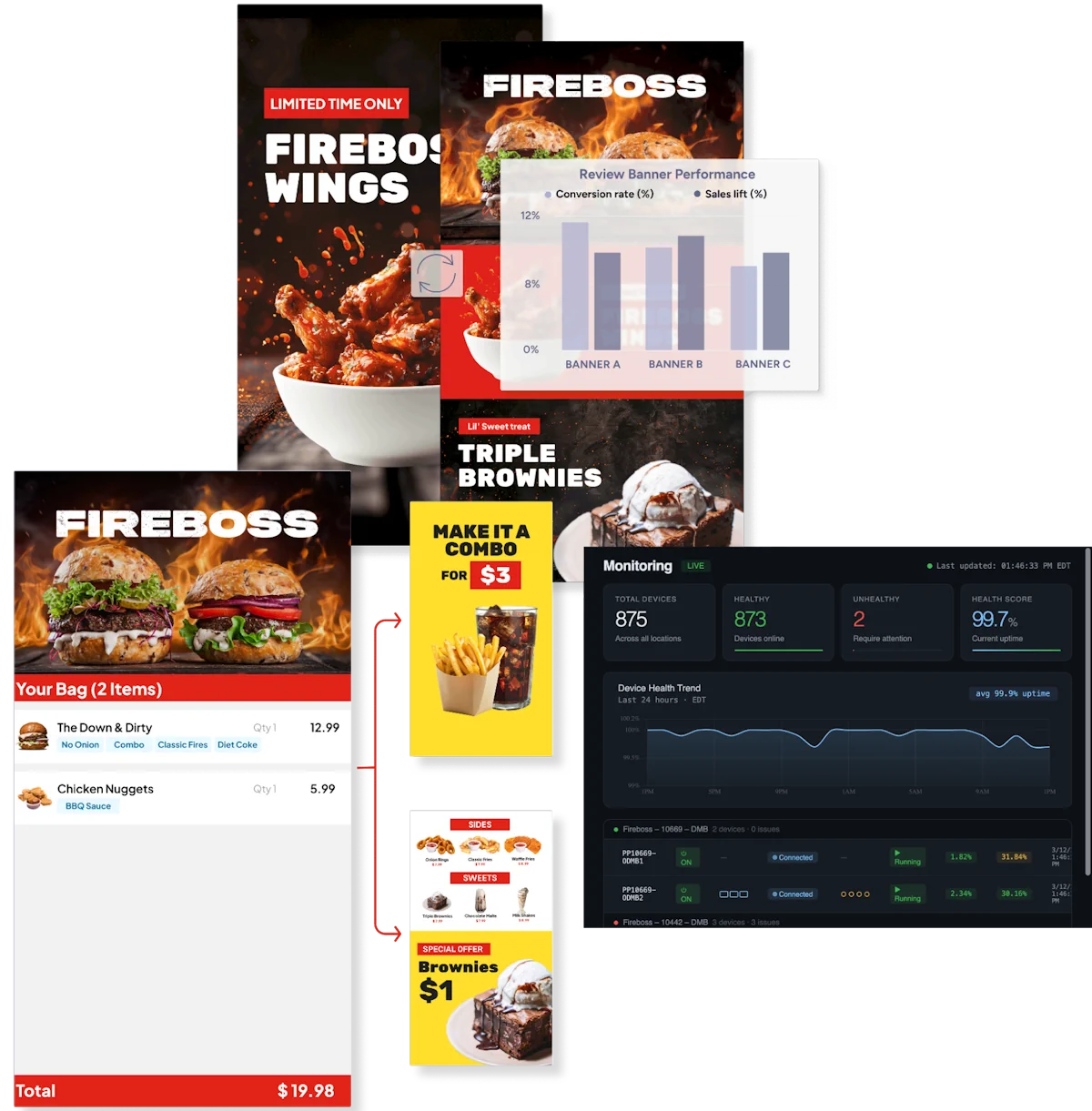
- Order context (suggesting sides or desserts based on cart items)
This isn’t a gimmick. It’s measurable influence. Dynamic Yield’s study with McDonald’s showed consistent check-size growth through contextual upsells, proving that screen intelligence directly increases basket value (Mastercard Dynamic Yield Case Study).
c) Measure, Attribute, and Prove ROI
2026 will also be the year marketing gets full visibility into what works and what doesn’t.
Forget “screen uptime” as success. Instead, marketing teams should track:
- Item-level sales lift post-banner test
- AOV change across test vs. control stores
- Campaign launch-to-live time (as a proxy for marketing agility)
- Service ticket reduction (cost avoidance through automation)
As the Enterprise Buyer’s Guide to Digital Menu Boards outlines, ROI sits on three pillars: Revenue Lift, Cost Avoidance, and Operational Agility, all measurable when marketing owns the screen.
4. Building the Marketing Infrastructure for Speed and Scale
The gap between great marketing ideas and screen execution often comes down to infrastructure. A modern platform should empower your team, not gate it.
Look for these 2026 essentials:
- Centralized CMS with role-based marketing permissions
- POS and loyalty integration for real-time data sync
- Local and regional targeting for franchise-level flexibility
- Offline caching to guarantee uptime even when connectivity drops
- Real-time dashboards to see what’s performing by store, region, or creative
Hardware matters too. Many SoC displays can’t handle enterprise-level transitions or failover. Layering in modern media players extends your current investment and enables richer, faster content control without full replacements.
You don’t need a rip-and-replace plan. You need a marketing-ready infrastructure.
5. Looking Ahead: The 2026 Marketing Opportunity
The next wave of innovation will converge AI, voice, and digital menu boards, turning every drive-thru and front-counter screen into a living part of your brand experience.
Expect to see:
- Voice and visual synergy in drive-thrus, where AI-driven voice and screen prompts work together for smarter upsells.
- Cross-channel orchestration, where a loyalty offer in-app triggers a live promo on the pickup screen.
The biggest opportunity is positioning digital menu boards not as cost centers but as your most measurable owned media channel.
6. Decision Checklist for Marketing Leaders
Before you finalize your 2026 digital menu strategy, ask yourself:
- Can my team launch a screen campaign in under 48 hours?
- Are in-store and drive-thru screens consistent across creative and pricing?
- Can we test and measure like we do with paid ads?
- Are results visible to marketing, not buried in ops reports?
- Does our CMS integrate seamlessly with POS, loyalty, and CRM data?
- Are we treating these screens as “owned media” with defined KPIs and budgets?
If any answer is no, it’s time to evolve your approach.
The Bottom Line
In 2026, your guests won’t see “digital signage.”
They’ll see your brand’s agility, intelligence, and intent in real time.
For marketing leaders, this is your moment to connect creativity with conversion, brand with data, and storytelling with measurable sales.
When the next CMO dashboard review rolls around, imagine saying:
“Our in-store and drive-thru screens now deliver measurable lift in average order value — even a 0.5% increase proves how every on-screen moment counts.”
That’s the marketing future of digital menu boards.
And the screens are ready if you are.
Why Checkmate
Checkmate helps leading restaurant brands turn digital menu boards into revenue-driving marketing channels.
With AI-powered optimization, built-in testing, and direct POS integration, Checkmate gives marketing teams the control, speed, and data visibility they’ve been missing.
Launch faster. Test smarter. Measure more.
Book a demo →