For years, "digital menu board" has meant a screen. Hardware first, software second.
That's backwards.
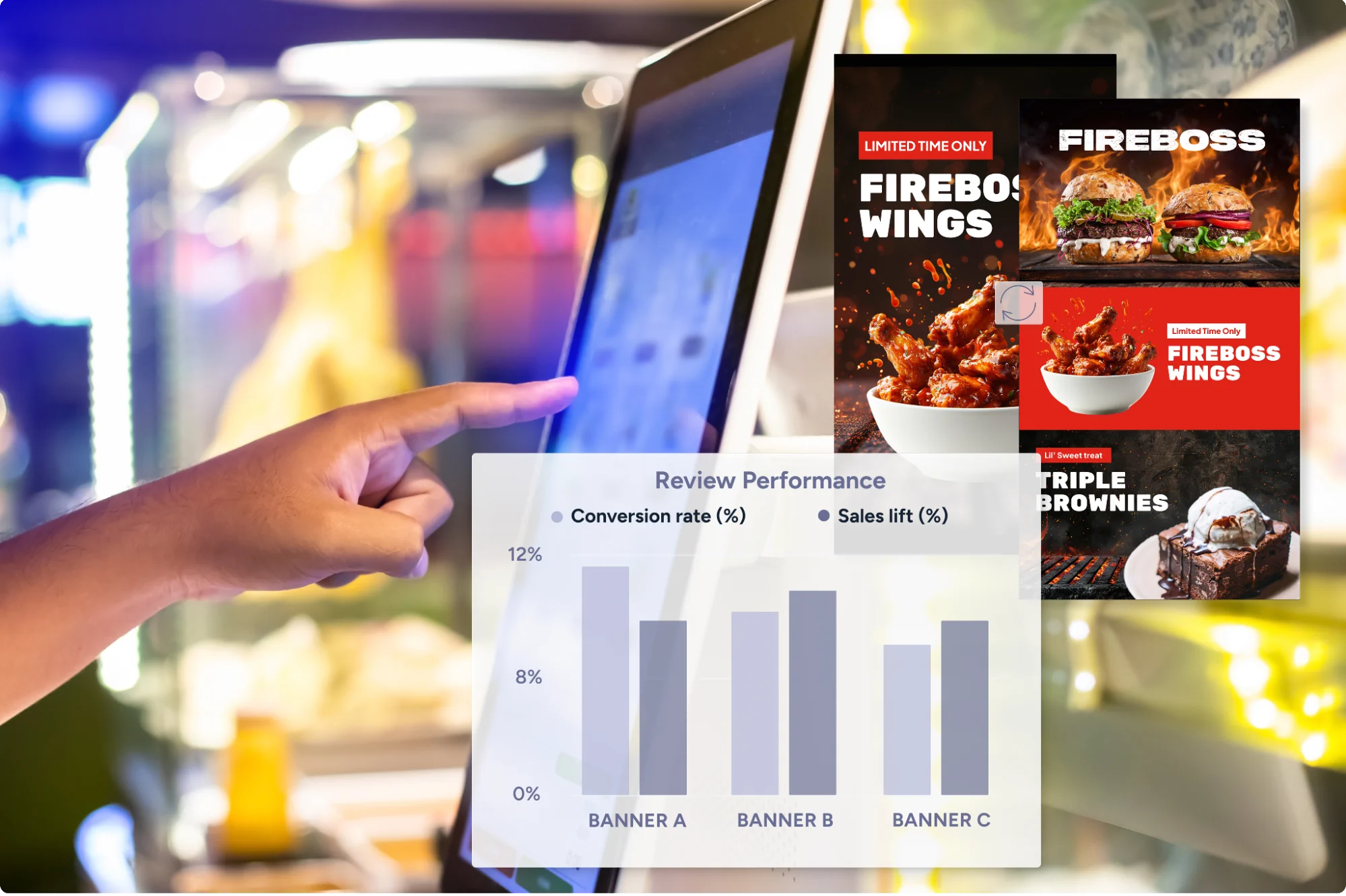
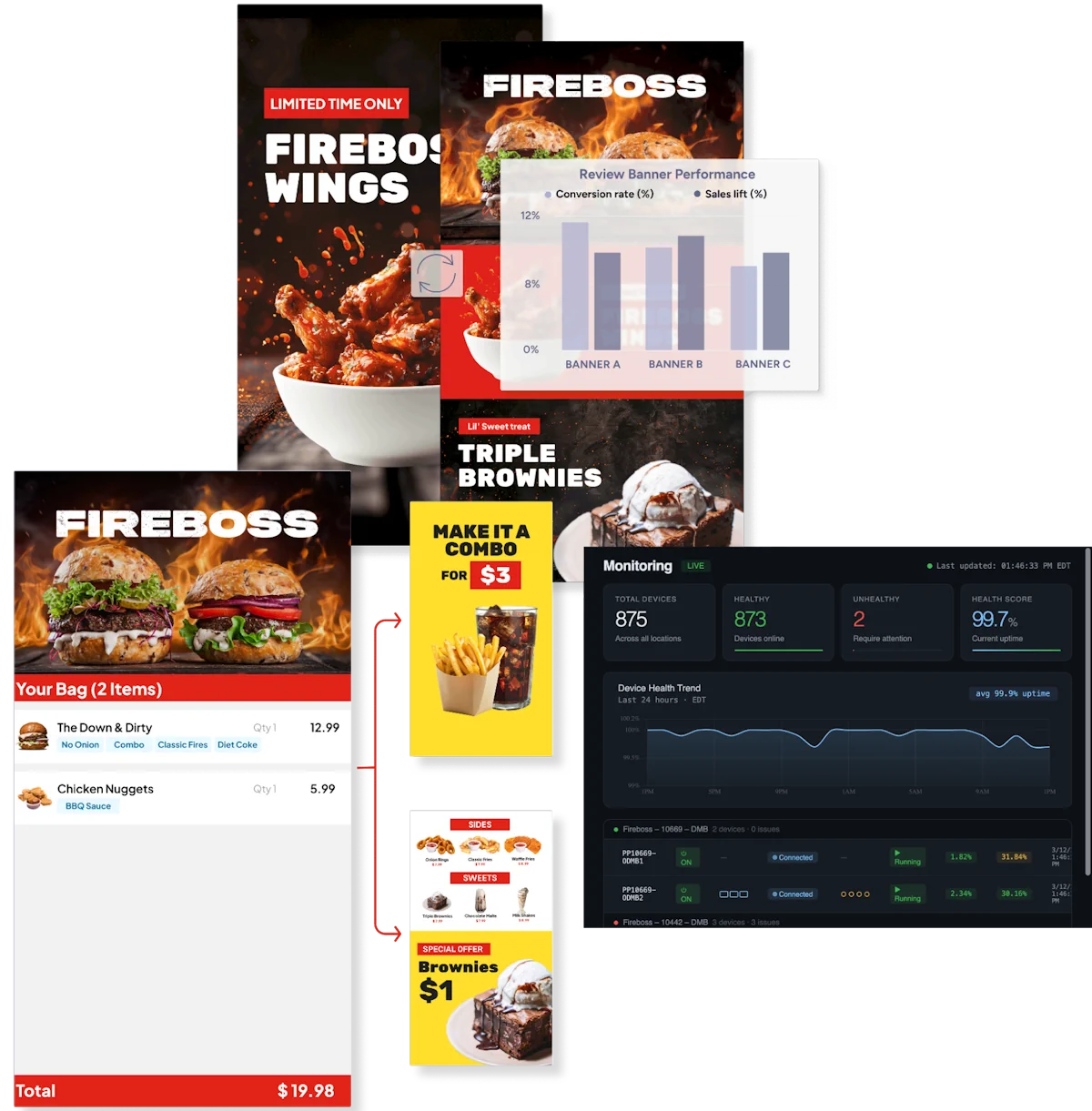
The screen is a commodity. Any display can show a menu. What actually determines whether your menu boards drive revenue is the software behind them, how quickly content can change, whether you can monitor every board in real time, and whether you can test what's actually influencing customer behavior.
Most vendors intentionally bundle hardware and software together. Buy their hardware, and you're locked into their software. Want better software? Suddenly you're told you need to replace perfectly good screens.
The bundle isn't designed for flexibility. It's designed to keep you from leaving.
The Hardware Myth
One of the biggest misconceptions in the industry is that switching Digital Menu Board (DMB) software means replacing your hardware.
It doesn't.
Your screens, media players, and mounts can usually stay exactly where they are. What changes is the software layer that manages your content, monitors your network, and enables experimentation.
If your current DMB provider is stepping away from the category, the hardware isn't disappearing. The software is. And software can be replaced without removing a single screen.
The thing keeping many restaurant brands locked in isn't aging hardware. It's the assumption that switching means starting over.
Once you separate hardware from software, the economics change. Hardware becomes a one-time investment. Software becomes the asset that creates value over time through faster content updates, better visibility, and continuous optimization.
The screen never drove performance.
The software did.
Download the DMB hardware vs. software PDF to learn more.
DMB Software Is Really a CMS
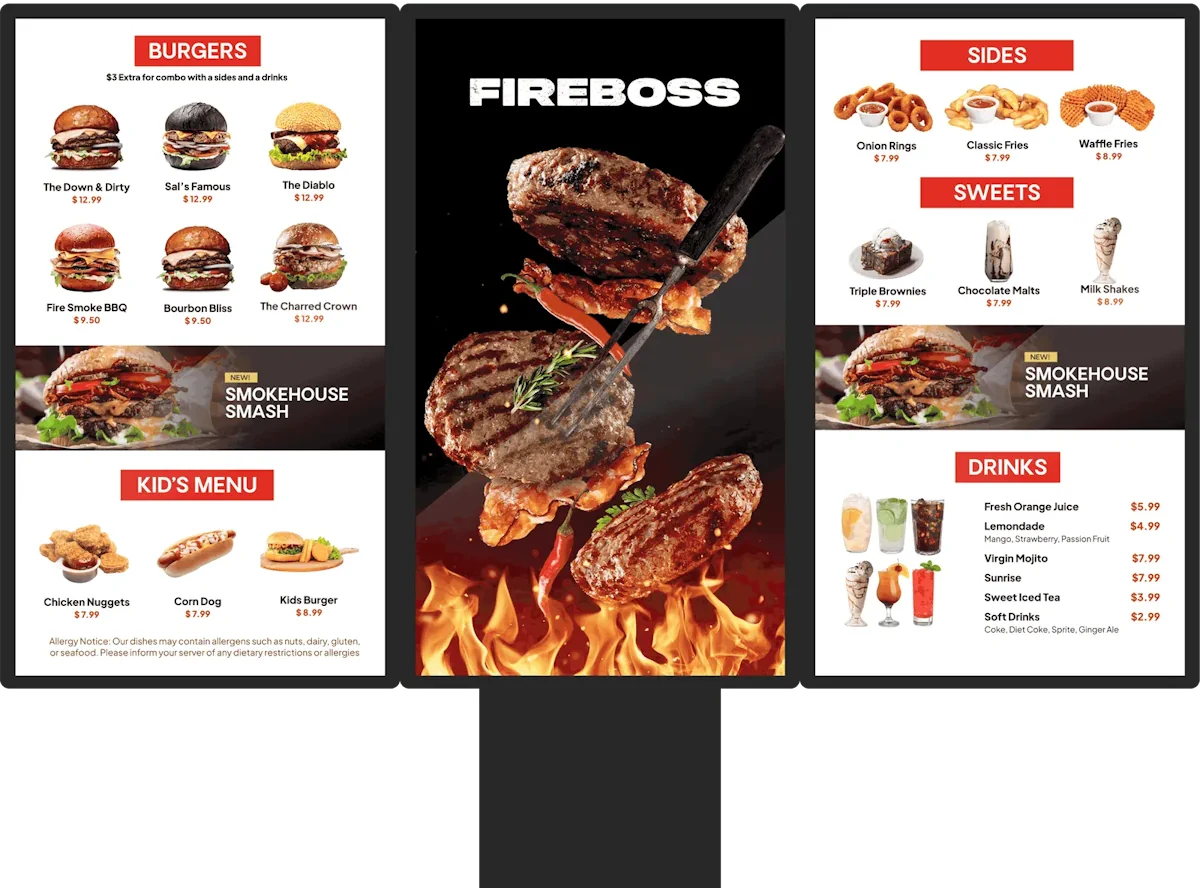
When brands start evaluating digital menu board software, they're usually searching for a content management system.
But here's the interesting part.
Most of them don't actually want to manage one.
The first question is almost always, "Can we run it ourselves?"
But that's solving the wrong problem.
The real goal isn't owning another platform. It's getting menu updates, pricing changes, LTOs, and daypart content live when you need them, not when a vendor gets around to it.
Owning a CMS doesn't guarantee speed.
Operating it does.
Content creation, quality assurance, scheduling, deployment, monitoring, and optimization all require people. That's an operational function, not just a software license.
Look across the rest of your business. Your website has a CMS. Your social channels have publishing tools. Your email marketing runs through automation platforms.
Yet one of your highest-traffic digital channels, the menu board customers look at before ordering, is often still managed through slow update queues because the software was bundled with the hardware.
That's not a hardware problem.
It's a content management problem.
A CMS you have to operate is another system to manage.
A CMS that's managed for you delivers the outcome you actually wanted.
Stop asking who owns the platform.
Start asking who owns the result.
Download our PDF to learn more about solving your content management problem.
Monitoring Isn't Observability
Here's something most restaurant brands don't think about until something goes wrong.
The first sign a menu board is offline shouldn't be a customer telling you.
Yet that's exactly how many brands find out.
Without visibility into their network, operators don't know whether content deployed successfully, whether a player is offline, or whether a screen has gone dark until someone notices.
Real observability is different.
It means seeing the health of every menu board in real time, including player status, content versions, connectivity, and system performance, before the problem reaches the guest.
Imagine a location where an HDMI cable gets chewed through overnight. Without the right visibility, the first sign something is wrong is a customer complaint the next morning. With it, the issue appears as an alert immediately, allowing the team to resolve it before anyone notices.
That's the difference.
Monitoring tells you what happened.
Observability helps you catch issues before they impact the customer experience.
The menu board nobody is talking about may be the one costing you the most.
The Bottom Line
For years, the industry has sold digital menu boards as a hardware purchase.
But hardware has never been the competitive advantage.
Software is.
Once you separate the two, the conversation changes. It's no longer about replacing screens or investing in another installation. It's about running better software on the hardware you already own, software that enables faster content updates, complete visibility across every location, and continuous experimentation.
The screen doesn't care what's running on it.
Your business should.